933. Increasing Order Search Tree
2026/1/12大约 1 分钟约 305 字
933. Increasing Order Search Tree
难度: Easy
题目描述
Given the root of a binary search tree, rearrange the tree in in-order so that the leftmost node in the tree is now the root of the tree, and every node has no left child and only one right child.
Example 1:
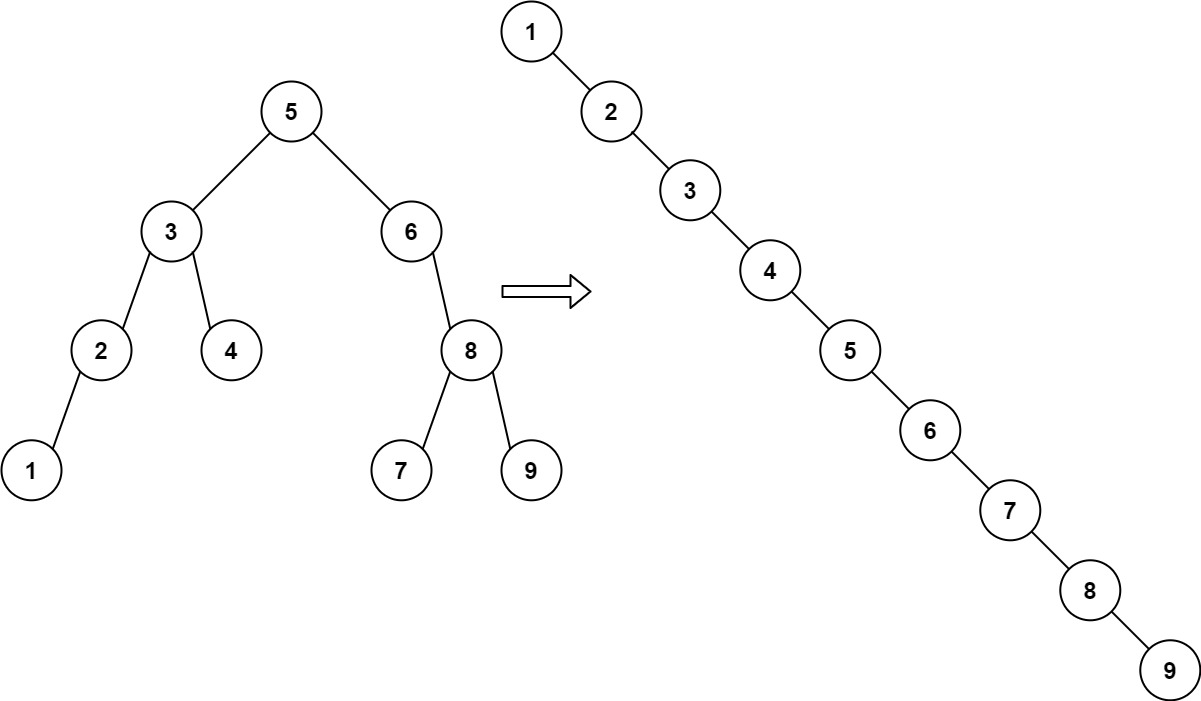
Input: root = [5,3,6,2,4,null,8,1,null,null,null,7,9]
Output: [1,null,2,null,3,null,4,null,5,null,6,null,7,null,8,null,9]
Example 2:
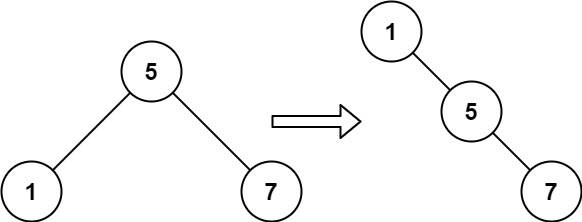
Input: root = [5,1,7]
Output: [1,null,5,null,7]
Constraints:
- The number of nodes in the given tree will be in the range
[1, 100]. 0 <= Node.val <= 1000
解题思路
代码实现
解决方案
java
/**
 * Definition for a binary tree node.
 * public class TreeNode {
 * int val;
 * TreeNode left;
 * TreeNode right;
 * TreeNode() {}
 * TreeNode(int val) { this.val = val; }
 * TreeNode(int val, TreeNode left, TreeNode right) {
 * this.val = val;
 * this.left = left;
 * this.right = right;
 * }
 * }
 */
class Solution {
    public TreeNode increasingBST(TreeNode root) {
        LinkedList<TreeNode> stk = new LinkedList<>();
        TreeNode cur = root;
        TreeNode newRoot = null;
        TreeNode pre = null;
        while (cur != null || !stk.isEmpty()) {

            while (cur != null) {
                stk.push(cur);
                cur = cur.left;
            }
            if (!stk.isEmpty()) {
                cur = stk.pop();
            }

            if (cur != null) {
                if (newRoot == null) {
                    newRoot = cur;
                    pre = newRoot;
                } else {
                    cur.left = null;
                    pre.right = cur;

                    pre = cur;
                }
                // res.add(cur.val);
                cur = cur.right;
            }

        }

        return newRoot;

    }
}